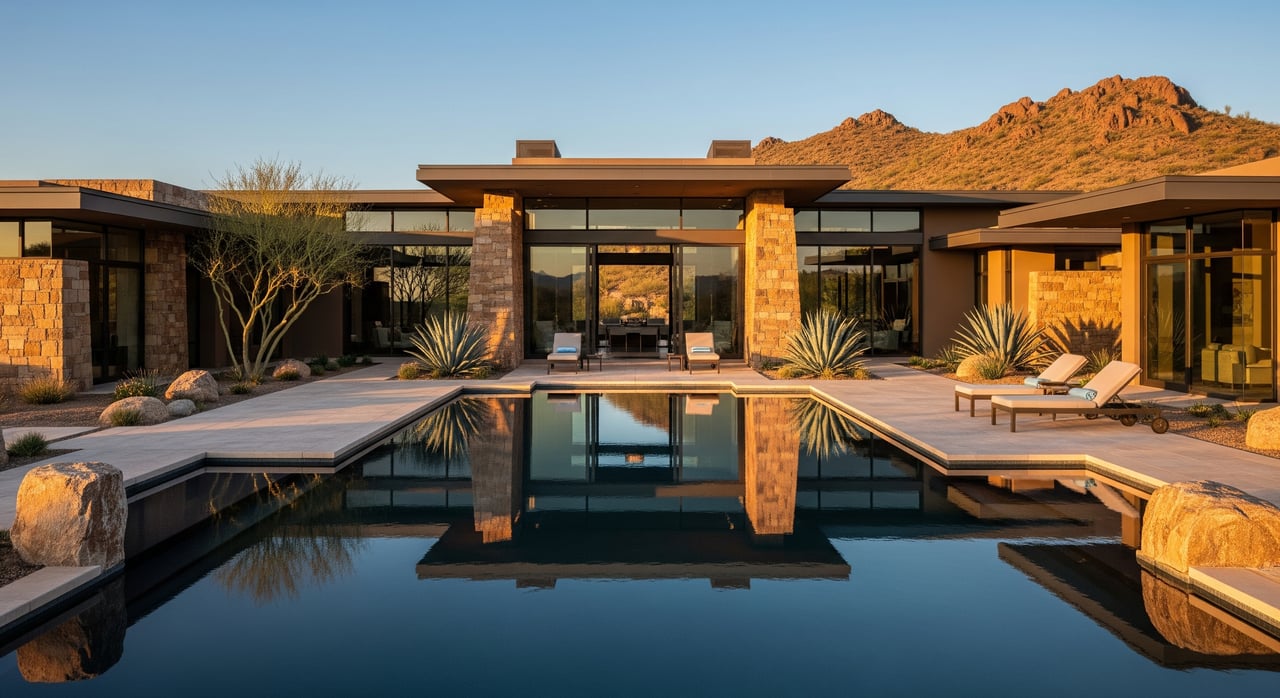
Is your Paradise Valley home hard to pin down on price because every property feels one of a kind? You are not alone. In a low-turnover luxury market where views, lot size, and privacy vary block by block, small pricing mistakes can cost you time and money. In this guide, you will learn how to use micro-comps, weight high-impact features, and choose the right list-price band so you launch strong and negotiate with confidence. Let’s dive in.
Paradise Valley market basics
Paradise Valley is a low-density, luxury market with large lots, custom builds, and frequent high-end renovations. Inventory is often limited and turnover is slower than urban neighborhoods. Properties that combine privacy, lot size, and genuine views can command strong premiums.
Your buyer pool often includes high-net-worth locals, executive relocations, seasonal owners, and investors. They prioritize land, privacy, views, and quality finishes. Because the buyer pool is smaller at the highest price points, pricing missteps can lead to long days on market.
Seasonality peaks in late winter and early spring when weather is ideal for showings, though affluent buyers shop year-round. For top-tier homes, consider the immediate competitive set more than the general calendar.
Use micro-comps that mirror buyers
Pricing power in Paradise Valley starts with a tight set of micro-comps. Focus on the properties a qualified buyer would actually consider alongside yours.
Stay close in time and distance
- Start with sales from the last 6 to 12 months. If your segment is very low turnover, widen to 12 to 18 months.
- Prioritize the same micro-market, such as the same ridge, street, or sub-neighborhood.
- Use a distance window of roughly 0.25 to 1 mile, then expand only if a more distant comp mirrors key features like elevation or view.
Match living area, lot, and layout
- Aim for living area within about 15 percent of your home. Larger gaps require careful per-square-foot adjustments.
- Keep lot size within about 25 to 50 percent, then adjust for meaningful differences in privacy and usability.
- Align bedroom and bathroom counts, and note functional features like guest houses or casitas.
Compare view and privacy first
- In Paradise Valley, panoramic mountain or valley views and ridge-top elevation can shift value more than interior finishes.
- Weigh privacy carefully. Setbacks, mature landscaping, and sightlines to neighbors change buyer perception and price.
Include actives and pendings wisely
- Active listings are your real-time competition and psychological anchors, not proof of value.
- Pending listings can hint at direction. Track list price and time on market to gauge traction.
- Withdrawn and expired listings reveal price resistance and can help you avoid repeating mistakes.
Document adjustments and rationale
- Build a grid that records sale date, days on market, and key features for each comp.
- Make dollar adjustments when possible. If you use percentages for quick estimates, validate with local evidence.
- Explain subjective calls clearly, such as a premium for a ridge orientation or a discount for limited privacy.
Weight features that move value
In Paradise Valley, some features carry outsized influence. A disciplined weighting approach keeps your pricing defensible.
High-weight drivers
- Views: Panoramic mountain or city-valley views are scarce and durable. Treat them as primary value drivers.
- Lot size and privacy: Larger lots and strong privacy often command meaningful premiums.
- Location and topography: Ridge-top or hillside parcels typically outpace similar homes on flat lots.
- Condition and finishes: Luxury kitchens and baths, updated systems, and quality materials can shift buyer willingness to pay at the top of the market.
Mid-weight essentials
- Pool and outdoor living: Common in the Phoenix metro and still meaningful given year-round use.
- Guest house or ADU: Adds flexible living options and potential income if permitted and well finished.
- Garage capacity and storage: Important for buyers who value vehicles, toys, and workspace.
Low-to-moderate factors
- Architectural style: Can matter if a style is prized, but many buyers favor turnkey contemporary updates.
- Landscaping: Mature, water-wise landscaping that enhances privacy helps, though maintenance needs vary by buyer.
Turn weighting into pricing
- Build a feature list for your home and each comp.
- Assign qualitative scores from negative to positive for major attributes like view, lot, and condition.
- Translate scores into dollar adjustments using recent local evidence. If exact numbers are not available, label any percent-based proxy as illustrative and verify with new paired sales.
Prep and presentation that support price
In a luxury market, presentation shapes both your achievable price and your speed to contract. Focus on confidence, clarity, and polish.
Pre-listing checks and fixes
- Order pre-listing inspections on major systems like roof and HVAC to reduce buyer friction.
- Address safety and major defects up front, then consider targeted updates for the kitchen, main bath, paint, and flooring.
- Evaluate landscaping for privacy and view corridors. Trimming or replanting can improve marketability and photos.
Staging and media that sell
- Professional staging should highlight scale, light, and indoor-outdoor flow.
- Expect high-quality media: interior photography, twilight images, aerials for lot and view context, and a polished video walkthrough.
- Provide floor plans and a simple lot orientation diagram to help buyers understand scale and positioning quickly.
Digital exposure and the right eyes
- Syndicate broadly through the MLS and luxury channels that reach qualified buyers locally and nationally.
- Lead marketing with your highest-value attributes like views, acreage, or a permitted guest house.
- Use private showings and broker previews to reach relocation partners and high-net-worth networks.
Permits and disclosures
- In Arizona, sellers typically complete a Seller’s Property Disclosure Statement and disclose known defects.
- Verify permits for remodels, pools, guest houses, and ADUs. Unpermitted work must be disclosed and may affect pricing or timing.
- If your neighborhood has HOA or CC&R rules, gather relevant documents early to support clean negotiations.
Set a list-price band and plan
A clear pricing band helps you align strategy with your goals. Start by establishing a single best estimate of market value using your micro-comps and adjustments.
Choose one of three bands
- Aggressive market-penetration: List about 0 to 3 percent below your market estimate to spark early traffic and invite multiple offers.
- Market balanced: List at or very near the estimate to drive predictable exposure with a typical negotiation range.
- Conservative high-anchor: List about 3 to 8 percent above the estimate to test the ceiling. Be prepared for longer days on market.
Match the band to your goals
- Speed and certainty: Favor aggressive or market bands.
- Top-dollar with patience: Consider the conservative band and monitor closely.
- Significant needed repairs: Lean toward the aggressive band to offset buyer risk.
Set your negotiation guardrails
- Define net proceeds, minimum acceptable price, and concession limits in advance.
- Decide on credits or repair allowances you could offer without hurting your bottom line.
- Calendar review checkpoints, such as 14 to 21 days after launch, using showing volume and feedback to confirm or adjust.
Read market response early
In the first two weeks, track showings per week, online listing views and click-through rate, and quality of agent feedback. Compare your engagement to similar active listings in your micro-market. If your showings lag and feedback focuses on price, condition, or photos, respond quickly.
- If traffic is light: Reassess list price, refresh media, or expand marketing channels.
- If traffic is solid but no offers: Review buyer objections for solvable issues like small repairs or layout clarity.
- If offers arrive quickly: Validate that you priced within the right band and use leverage to negotiate terms, not just price.
A practical example of decision flow
- Need to sell fast: Choose the aggressive band and plan for a strong first two weeks.
- Want fair market pace: Choose the market band and expect typical negotiation.
- Willing to test the ceiling: Choose the conservative band, monitor showings and feedback, and make the first price movement before your days on market signal staleness.
What you will get in a pricing consult
A robust pricing consult should provide clarity, confidence, and a plan you can execute.
- A micro-comp grid with sold, pending, active, and withdrawn listings, including time adjustments and explained feature adjustments.
- A documented market value estimate with high and low sensitivity ranges.
- A recommended list-price band with rationale tied to your goals and the comps.
- A marketing plan summary for staging, photography, video, and targeted outreach, including expected costs that affect net proceeds.
- A listing timeline with checkpoints at 14, 30, and 60 days, plus an offer-negotiation plan and minimum acceptable net proceeds.
- A checklist of permits, disclosures, and HOA or CC&R documents to gather before launch.
How Logan supports sellers
You deserve a pricing process that is transparent, data-driven, and tailored to your property. With a concierge-style approach backed by brokerage-grade tools, you get personal guidance along with elevated presentation. You also gain access to listing-prep support, professional media, and a clear plan to reach qualified buyers.
If you are preparing to sell in Paradise Valley, the right pricing strategy can shorten your timeline and protect your bottom line. Ready to move forward with clarity and confidence? Connect with Logan Lewis to schedule a consult or get your free home valuation.
FAQs
How do Paradise Valley views affect price?
- Genuine panoramic mountain or valley views often command a major premium because they are scarce and not easily replicated, so weight views heavily in your comp adjustments.
What time of year is best to list in Paradise Valley?
- Late winter and early spring typically see peak showing activity due to ideal weather, but qualified buyers are active year-round and your immediate competition may matter more than the calendar.
How should I value a guest house in Paradise Valley?
- Treat a permitted, well-finished guest house as a mid-weight value factor and adjust based on size, quality, and evidence from recent local sales that include similar structures.
How quickly should I adjust price if showings are slow?
- Review after the first 14 to 21 days using showings, online views, and agent feedback; if you lag similar listings, consider a price move or presentation upgrades.
What disclosures do Arizona sellers need to provide?
- Arizona sellers typically complete a Seller’s Property Disclosure Statement and must disclose known defects and any unpermitted work, plus relevant HOA or CC&R rules if applicable.