Wondering whether North Scottsdale or South Scottsdale fits your lifestyle better? You are not alone. If you are narrowing down where to buy in Scottsdale, the choice often comes down to a simple question: do you want more space and desert surroundings, or more walkability and close-in convenience? This guide breaks down the real differences so you can compare daily life, housing options, and price patterns with more confidence. Let’s dive in.
How Scottsdale Splits North and South
Scottsdale does not use one official north-versus-south dividing line. Instead, the city plans by character areas, which helps explain why different parts of Scottsdale feel so distinct.
For buyers, “North Scottsdale” usually means the city’s northern and northeastern desert areas. That includes places tied to character areas such as Cactus Corridor, Shea, Desert Foothills, Dynamite Foothills, and communities near the McDowell Sonoran Preserve.
“South Scottsdale” usually refers to the city’s southern portion, including Old Town Scottsdale and nearby neighborhoods. The city identifies Southern Scottsdale as the southern-most character area, bounded by Indian Bend Road, Tempe, Phoenix, and Paradise Valley.
North Scottsdale Lifestyle
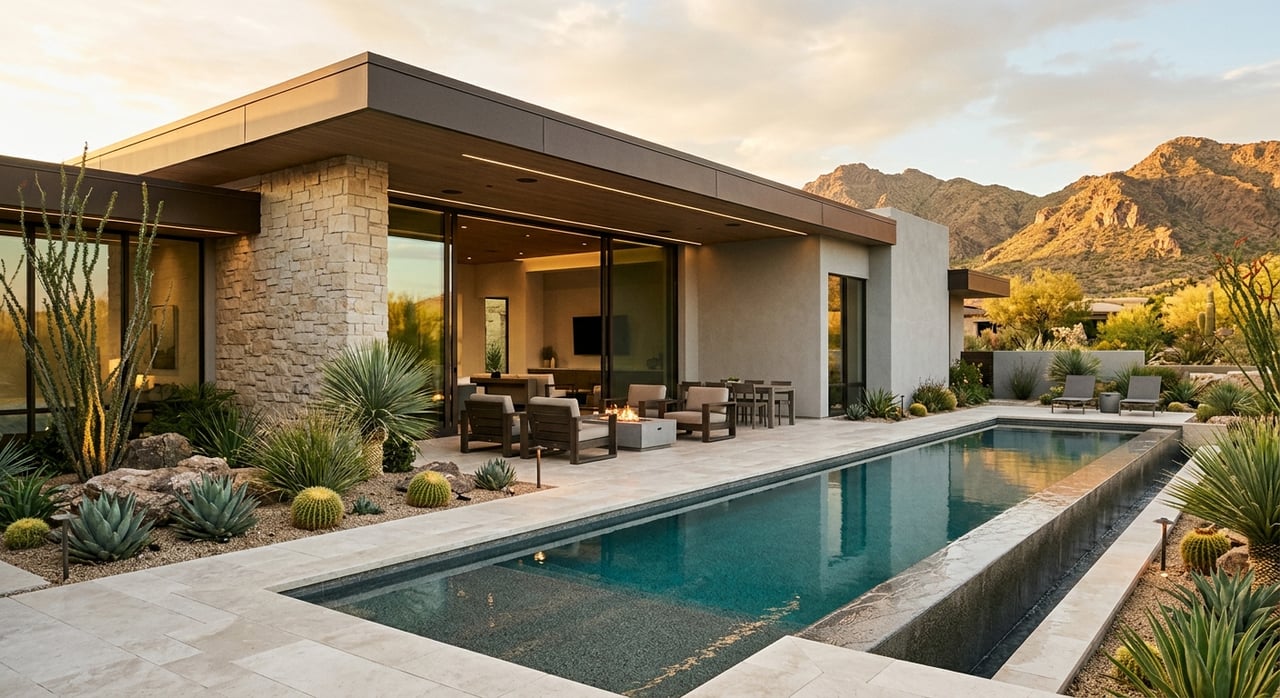
North Scottsdale tends to feel more spread out, quiet, and desert-oriented. City planning documents describe these areas with terms like open space, scenic corridors, rural character, and lower-density residential patterns.
In day-to-day life, that often means you trade some convenience for more breathing room. If you picture larger lots, mountain views, preserve access, and a more private setting, North Scottsdale often aligns with that lifestyle.
North Scottsdale Housing
Housing in North Scottsdale is generally centered around lower-density homes on larger lots. In places like Cactus Corridor, lot sizes can range from about 35,000 square feet up to 2.5 acres, while parts of Dynamite Foothills are associated with 2-to-3-acre lots and even one-to-five-acre rural desert lots in the Foothills Overlay.
You will also find strong representation of custom and semi-custom homes in the north. The Desert Foothills area, in particular, is tied to a desert-retreat setting and equestrian-oriented living in the city’s planning framework.
North Scottsdale Daily Routine
North Scottsdale often supports an outdoor-first routine. The McDowell Sonoran Preserve offers protected desert habitat and access to trailheads such as Brown’s Ranch, Pima Dynamite, Fraesfield, and Tom’s Thumb.
WestWorld at 16601 N Pima Road also adds to the north side’s identity as an equestrian and special-events hub. Together, these features reinforce a lifestyle built around trails, open land, and destination amenities.
Because the area is lower density, day-to-day life is usually more car-oriented. In practical terms, many buyers choose North Scottsdale when they are comfortable driving more in exchange for space, privacy, and preserve access.
South Scottsdale Lifestyle
South Scottsdale feels more urban, connected, and mixed-use. That is especially true around Old Town, where the city’s planning emphasizes pedestrian-oriented development and a more walkable pattern.
If you want easier access to restaurants, shops, art galleries, green spaces, and regional destinations, South Scottsdale often checks those boxes. The south side also sits closer to Tempe, Phoenix, and the airport corridor, which can shape your daily routine in a big way.
South Scottsdale Housing
South Scottsdale has some of the city’s oldest housing stock. According to the Southern Scottsdale plan, much of the area was developed from the late 1950s through the early 1980s and consists primarily of single-family detached ranch-style homes.
That older housing base creates a different feel than the north. Instead of large new subdivisions, the city’s planning in South Scottsdale emphasizes reinvestment, revitalization, and infill.
Old Town adds another layer to the housing mix. There, the city identifies mid-century apartments and condos, newer multifamily housing, lofts, townhomes, patio homes, and live/work units as part of the area’s development pattern and goals.
This broader housing mix means South Scottsdale is often the part of the city where you will see more condos, townhomes, rental inventory, and smaller-lot redevelopment. The city’s current planning also calls for mixed-use housing and a wider range of housing types and price points.
South Scottsdale Daily Routine
South Scottsdale is the more connection-heavy side of the city. The area is close to Downtown Tempe, ASU, SkySong, Papago Park, Tempe Town Lake, downtown Scottsdale, and the broader Phoenix Sky Harbor corridor.
That can translate into shorter, more flexible daily trips depending on where you work or spend your time. If your routine includes frequent outings, dining, errands, or travel, the south side may feel easier to navigate.
Old Town is Scottsdale’s primary cultural, civic, retail, and government center. The city says Old Town is home to more than 90 restaurants, 320 retail shops, and more than 80 art galleries, which helps explain why this area feels more active than the far north.
South Scottsdale also benefits from the Indian Bend Wash Greenbelt, which runs 11 miles through Scottsdale and includes more than 24 grade-separated crossings. Combined with Scottsdale’s free trolley network and Valley Metro connections, this makes the south side better suited to walking, biking, and short-hop errands.
Price Differences Between North and South
In broad terms, the farther north you go, the more the market tends to shift toward larger lots and higher price points. South Scottsdale generally offers more varied housing types and lower entry points, especially when condos and older homes are part of the search.
Current zip-code proxies support that pattern. Realtor.com snapshots show a median listing price of about $600,000 in 85251, a common South Scottsdale proxy, compared with about $737,000 in 85260, about $1.76 million in 85255, and about $2.10 million in 85262.
These are zip-level snapshots, not official neighborhood boundaries. Still, they help illustrate a clear north-to-south price gradient that many buyers will notice when comparing inventory.
What Buyers Usually Trade Off
Choosing between North and South Scottsdale is usually less about which area is “better” and more about which trade-offs fit your priorities. Each side offers a different version of Scottsdale living.
Here is the simplest way to think about it:
- North Scottsdale often appeals to buyers who want larger lots, more privacy, preserve access, custom or semi-custom homes, and a quieter desert setting.
- South Scottsdale often appeals to buyers who want older-home value, more condo and townhome options, stronger walkability near Old Town, trolley access, and shorter trips to Tempe, Phoenix, and airport-adjacent destinations.
If you are moving from out of state, this comparison matters even more. Scottsdale can look similar on a map, but your daily experience can feel very different depending on which part of the city you choose.
Which Scottsdale Lifestyle Fits You?
North Scottsdale may be the better fit if you want your home to feel more like a retreat. Buyers drawn to open desert views, trailheads, custom homes, and a lower-density setting often prefer the north side.
South Scottsdale may be the better fit if you want more activity around you. Buyers who value nearby dining, shopping, greenbelt access, mixed housing options, and easier regional connections often lean south.
If you are still deciding, it helps to compare not just homes but routines. Think about how often you want to drive, what kind of outdoor access matters most, and whether your ideal home is a larger-lot property or a lower-maintenance condo, townhome, or smaller-lot house.
The right choice comes down to how you want to live, not just what looks good online. If you want help comparing specific neighborhoods, price ranges, or property types in Scottsdale, Logan Lewis can help you narrow the options and move forward with a clear plan.
FAQs
Which part of Scottsdale is more walkable for buyers?
- South Scottsdale, especially around Old Town and the Greenbelt, has the strongest walkable and trolley-connected environment.
Which part of Scottsdale has larger lots and custom homes?
- North Scottsdale has the strongest concentration of larger lots and custom or semi-custom homes, especially in foothill and preserve-edge areas.
Which part of Scottsdale is usually more expensive?
- North Scottsdale is generally more expensive based on current zip-code price proxies, with 85255 and 85262 showing much higher median listing prices than 85251.
Which part of Scottsdale is better for trails and outdoor routines?
- North Scottsdale is more closely tied to preserve access and desert trailheads, while South Scottsdale leans more toward the Greenbelt, bike paths, and urban parks.
Which part of Scottsdale has more condos and mixed-use housing?
- South Scottsdale, especially around Old Town, has more condos, apartments, townhomes, and mixed-use housing options.
Which part of Scottsdale is closer to Tempe and the airport corridor?
- South Scottsdale is closer to Tempe, Downtown Phoenix, and the broader Phoenix Sky Harbor airport corridor.